Landlord guide
Rental turnover wall repair in Big Spring
Big Spring has a lot of rental houses. The 2020 census counted close to ten thousand housing units in the city, and about four in ten occupied homes were rented. If you own or manage a few of them, wall repair is a regular turnover expense. This guide is about keeping that expense the right size: fixing what a new tenant will notice, leaving what they will not, and fitting it into the days between leases.
Move-out walk-through
Walk every room with the lights on and the blinds open, then a second time with a flashlight laid almost parallel to each wall surface. The flashlight shows dents, anchor holes and ridges that ordinary light hides. Mark each spot with a small piece of painter's tape so nothing is missed when the work starts.
Sort what you find into three piles. Nail and screw holes from pictures are normal wear in most leases and quick to fill. Doorknob holes, gouges from furniture and crushed corners are damage. Stains, sags and soft spots point to water and need a closer look before anything else.
Patch or repaint
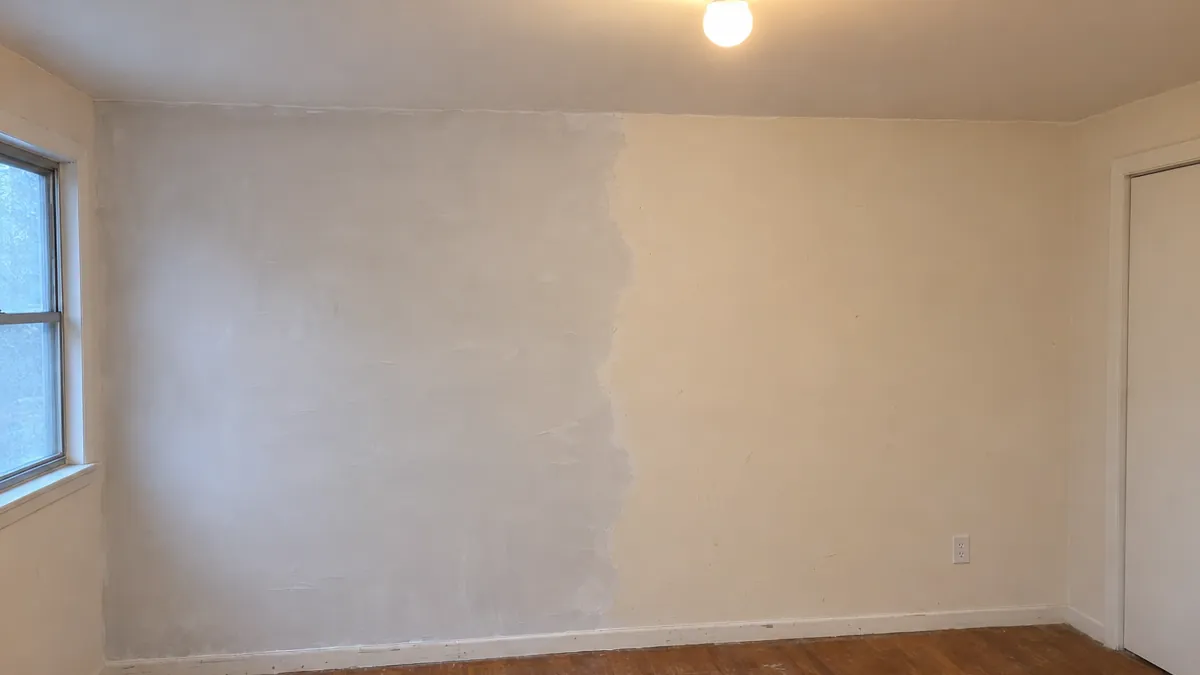
A patch without paint is rarely finished. Fresh compound and primer take paint differently from the old surface, so a dab of touch-up over a repair tends to flash in daylight. If a wall has more than two or three patches, repaint it corner to corner. If it has one small fill near a corner, touch-up can be enough, especially in a closet or hallway.
Keep the paint name and sheen for every unit on file. Flat on ceilings, eggshell or satin on walls is the usual combination, and buying the same product each time makes small turnovers much faster.
Scheduling the gap
Drywall goes before paint, and paint goes before cleaning and carpet. A typical turnover with a handful of small holes fits in one long visit. Anything with a cut-out patch or a ceiling section needs two visits a day or so apart for curing and texture, then a day before paint. Book the drywall the day keys come back, not the day before the new lease.
In summer, keep the air conditioning on in a vacant unit while work is under way. July afternoons in Big Spring average about 96°F, and compound in a closed, hot house skins over before it can be worked properly.
Texture in rentals
Most rental houses in town have sprayed walls, usually orange peel or knockdown. A smooth patch on a textured wall is the giveaway a prospective tenant spots first. If you are doing your own small fills, a spray can of texture is fine for coin-size spots. For anything larger, a hopper-gun match is worth hiring out, and our orange peel and knockdown matching page explains why.
Keeping a record
Photograph every damaged spot at move-out, wide and close, with the date. If you deduct repairs from a deposit, a clear record and a written description of the work make the conversation simpler. We can describe what we repaired and why, in plain terms.
Cutting repeat damage
The same holes come back for the same reasons. Put a door stop on every door that swings into a wall. Offer tenants adhesive hooks or a picture rail so they do not reach for anchors. Protect outside corners in hallways with a clear corner guard. None of it is expensive, and all of it means fewer patches at the next turnover.
When a unit has more than a few small fills, or the damage is a crack or a stain, see our patching page for punched and dented walls, or send the list through the contact page and we will tell you what is worth hiring out.